My Journey
A Career Story, in the Words Behind the Resume
Dr. Farouk A. Umaru, PhD, MBA
Woodbridge, Virginia | 703-953-4592 | drfarouku@gmail.com | linkedin.com/in/faroukumaru | faroukconsulting.com
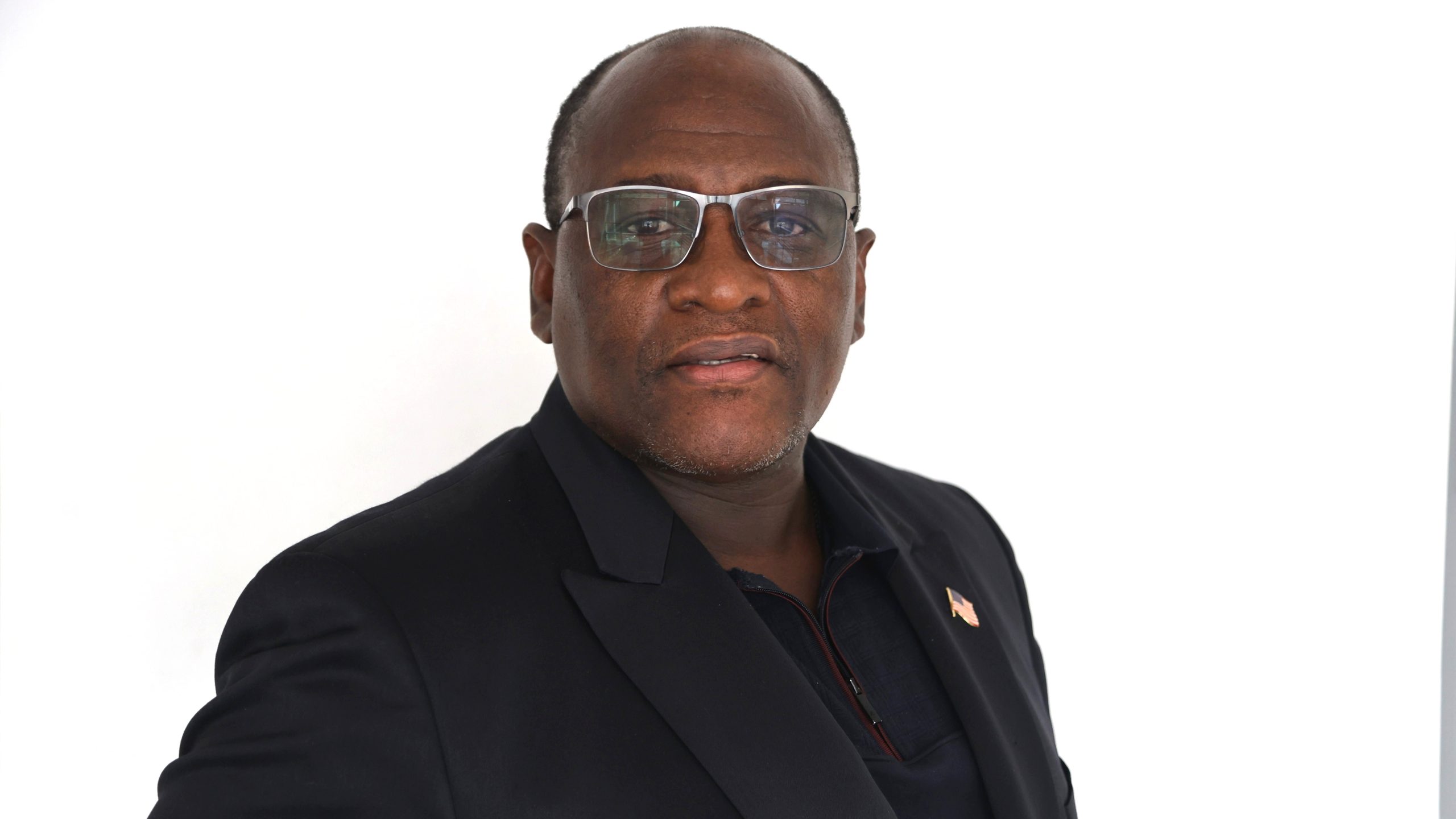
This is not a resume. A resume tells you the titles I held, the dates I held them, and the dollar figures attached to the programs I ran. It does not tell you why a twenty-two-year-old regulatory officer in Accra decided that laboratory supply chains were worth a career, or what it felt like twelve years later to sit in a headquarters office in Arlington, Virginia, and realize the decisions being made there determined whether a lab technician in Lusaka had the reagents she needed that week. This document is that story: the throughline connecting a bench in Ghana to a $5 billion federal proposal, and the reason I am still doing this work twenty-five years later.
2000 — Accra, Ghana
I started in 2000 as a Regulatory Officer in the Laboratory Services division of Ghana’s Food and Drugs Authority, reviewing pharmaceutical products before they reached the shelves of pharmacies across West Africa. The job title sounds administrative. It was not. Every batch I cleared or rejected was a judgment call about whether a medicine was safe enough to reach a patient who would never know my name, or that a decision I made stood between them and a counterfeit or substandard drug. Five years in that role taught me something no textbook does: a country’s drug safety net is only as strong as the person willing to say no to a shipment everyone else wants approved. That was not a comfortable lesson. It was the one that shaped everything that followed.
2005 — Windhoek, Namibia
In 2005, Namibia’s Ministry of Health and Social Services, through a Management Sciences for Health (MSH) program, asked me to manage its National Quality Assurance Laboratory in Windhoek. I said yes because I wanted to know whether the lesson from Accra held true outside Ghana, whether the discipline of a single well-run lab could actually anchor a country’s pharmaceutical testing system, not just supplement it. Two years in Windhoek answered that question. A laboratory is not a support function tucked behind the clinics and the pharmacies; it is the fact-checker for an entire national health system, and when it is run with rigor, everything downstream gets more honest.
2007 to 2012 — Lusaka, Zambia
PEPFAR and USAID sent me to Zambia in 2007 as Senior Laboratory Logistics Advisor with JSI’s Research and Training Institute. I spent the next five years managing laboratory supply chains across a PEPFAR portfolio in one of the highest HIV-burden regions in southern Africa. This was not policy work done from a distance. It was counting stock by hand in district warehouses, tracking cold-chain shipments that could not afford a delay, and knowing that a missed reagent order was not a line item, it was a diagnosis that would not happen on time. Five years of that work taught me to see supply chains the way an engineer sees a bridge: invisible when it holds, catastrophic when it doesn’t. I left Zambia in 2012 having built the kind of operational instinct that no headquarters training program can teach.
2012 — Arlington, Virginia: the pivot
Twelve years after Accra, I moved to Arlington, Virginia, to join JSI headquarters as Senior Advisor for Laboratory Supply Chain on the USAID Supply Chain Management Project, managing $100 million in service-level contracts across 25 PEPFAR-supported countries. People sometimes ask whether that move from field office to headquarters felt like a step up or a step away from the real work. It was neither. It was a chance to scale what I had already learned on the ground in three countries into decisions that reached two dozen more, turning field-level instinct into the kind of policy and funding calls that determine whether the next version of me, standing in the next Lusaka warehouse, has what he needs. The field taught me what the problem looks like up close. Arlington taught me how to fix it at scale.
2016 to 2021 — Rockville, Maryland: U.S. Pharmacopeia
At the United States Pharmacopeia in Rockville, Maryland, I progressed through four roles in five and a half years: Laboratory Manager, then Principal Technical Account Manager, then Director of Africa and Middle East Operations, and finally Program Director of the Global Health Laboratory portfolio. In that stretch I modernized 14 regional laboratories across 10 countries, guided them toward ISO/IEC 17025, 15189, and 13485 accreditation, and managed a $30 to $50 million P&L spanning more than 10 low- and middle-income countries. Four promotions in five and a half years is not a story about ambition. It is a story about what happens when you keep saying yes to the harder version of the same mission: build laboratory systems that hold up without you standing next to them.
2021 to 2024 — Arlington, Virginia: Amentum Government Services
At Amentum, I directed a $5 billion federal IDIQ proposal pursuit, the largest in the company’s global health portfolio, while safeguarding more than $100 million in ongoing product deliveries across the countries we already served. Leading a pursuit of that size means holding two jobs at once: protecting the programs already running so nothing drops, while building the case for programs that do not exist yet. I have never found those two jobs to be in conflict. The credibility that wins the next $5 billion pursuit is built entirely out of the $100 million you are still delivering on today.
2024 to 2025 — Washington, DC: Credence LLC
As Senior Manager of Healthcare Supply Chain at Credence LLC, supporting USAID in Washington, DC, I managed $500 million across five portfolios with zero shipment delays. Zero is not an average I aimed for. It is the number that comes from twenty-four years of treating every shipment like it has a name attached to it, because somewhere, it does.
March 2025 — Woodbridge, Virginia: founding Farouk Consulting Services
In March 2025, I founded Farouk Consulting Services to put that full arc, Ghana to Namibia to Zambia to Arlington to Rockville to Washington, to work for organizations that need someone who has actually run the programs they are trying to win. Twenty-five years after I first reviewed a shipment of medicine in Accra, the question I ask has not changed: does this system serve the person at the end of it? Every proposal I write, every laboratory strategy I design, and every win theme I build starts from that same question.
Alongside the work
Every one of those chapters ran alongside a parallel education, not before it. A BS and MSc in chemistry and pharmaceutical quality control systems from the Kwame Nkrumah University of Science and Technology in Kumasi, Ghana, gave me the technical foundation. An MBA in Operations Management from MANCOSA in Durban, South Africa, gave me the management vocabulary to match it. A PhD in Public Health from Walden University came last, completed while I was still running active programs, not before I started them. I added a Project Management Professional (PMP) certification in 2024 and a Certified AI Supply Chain Analyst credential in 2025, because the tools change even when the mission doesn’t. Along the way, I co-authored six peer-reviewed publications and speak English and Hausa at a professional level, both of which have mattered on nearly every multicultural team I have led over the past decade.
The next chapter
I am looking for my next chapter as an Executive Director or Program Director with an organization competing for global health and federal awards: USAID, CDC, HHS, PEPFAR, and their donor and NGO counterparts, where operational credibility is the discriminator that wins. I am not the consultant who has read about laboratory supply chains, incumbent recompetes, or multicultural proposal teams. I am the person who built Zambia’s laboratory logistics on the ground, modernized 14 laboratories across 10 countries at USP, and led the largest global health pursuit in Amentum’s portfolio to submission. If your organization needs someone who can walk into a proposal room, a laboratory strengthening program, or a $100 million-plus delivery commitment and already know what the work requires, I would welcome the conversation.
I am here to work with you to reach your organization’s growth goals.
Dr. Farouk A. Umaru, PhD, MBA | drfarouku@gmail.com | 703-953-4592 | linkedin.com/in/faroukumaru